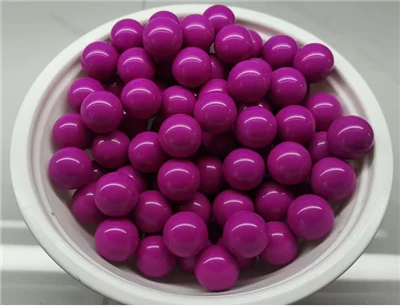
The material of ceramic balls has a significant impact on their performance and applications. The following are some common ceramic ball materials:
1. Alumina Ceramic Balls
Alumina ceramic balls are high-performance ceramic balls made primarily from alumina. They feature high hardness, wear resistance, thermal stability, and corrosion resistance, making them widely used in various grinding and dispersing applications. Alumina ceramic balls also have excellent impact resistance, allowing them to withstand large pressure fluctuations without breaking.
2. Silicon Nitride Ceramic Balls
Silicon Nitride ceramic balls are ultra-hard ceramic balls made primarily from silicon nitride. They possess extremely high hardness and wear resistance, even exceeding the performance of some metals. Silicon Nitride ceramic balls maintain excellent performance stability even at high temperatures, making them particularly suitable for grinding and dispersing applications under high-temperature and high-pressure conditions. However, due to the relatively complex and costly production process, the application range of silicon nitride ceramic balls is relatively limited.
3. Other Ceramic Balls
In addition to the two common materials mentioned above, there are many other ceramic ball materials available, such as silicon carbide and zirconium oxide. Ceramic balls made of these materials offer unique advantages in specific applications. For example, silicon carbide ceramic balls have extremely high thermal conductivity and thermal shock resistance, making them suitable for high-temperature heat exchange and heat transfer processes; while zirconium oxide ceramic balls are widely used in the biomedical field due t