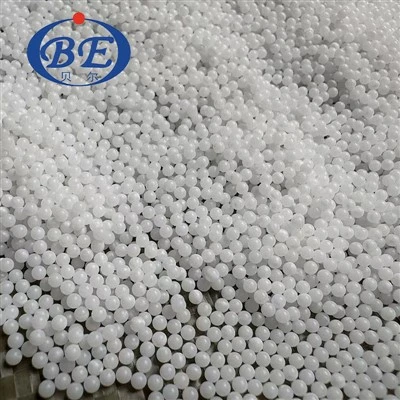
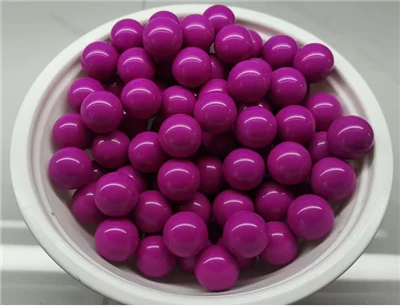
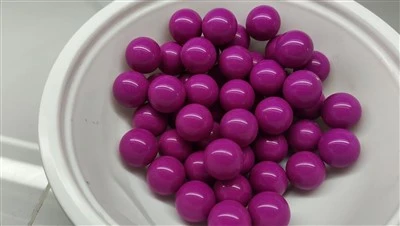
How to selecting our clear color 16mm glass ball ?
Below is our selecting our 16mm glass ball vedio ,please check
Kaifeng Bell Stainless Steel Ball Manufacture share how to selecting our glass ball with everyone as below :
Micron level persistence: screening password for solid high-precision glass balls through a sieve
In the microscopic world of precision manufacturing, solid high-precision glass balls with a diameter error of no more than ± 0.002 millimeters and a roundness accuracy of ± 0.005 millimeters are key basic components in fields such as instrumentation, optical equipment, and high-end bearings. From molten glass to millimeter level precision spheres, screening is the core level that determines quality. At the precision glass ball production base in Tai'an, Shandong, a screening system of "mechanical initial screening+fine screening grading+intelligent re inspection" is guarding the quality bottom line of each glass ball with micrometer level accuracy.
From furnace to sieve: precise preparation before screening
The selection of solid high-precision glass balls begins with strict front-end production control. High purity silica sand and soda ash are selected as raw materials, and the iron content is strictly controlled below 0.05% to avoid the influence of green spheres on transparency and accuracy. After the raw materials are crushed into fine particles of 0.05-0.3mm, they are melted into pure glass liquid at high temperatures of 1450-1550 ℃ to remove impurities such as bubbles and stones.
Glass liquid is dripped through a specially designed quartz dropper, forming a spherical body under the action of gravity and surface tension. After annealing, precision grinding, polishing and other processes, internal stress is eliminated and the surface is polished to achieve the required accuracy. The unfiltered glass balls have problems such as size deviation, insufficient roundness, and surface defects, which directly affect the operational accuracy of high-end equipment. "The workshop technical supervisor explained that screening is a key process for removing non-conforming products and achieving precise grading, and the sieve is the core tool of this process.
Sieve "layer by layer breakthrough": precise transformation from coarse sorting to fine screening
Entering the screening workshop, the automated screening production line runs at high speed, with crystal clear glass balls jumping and rolling on the screen, completing the transformation from "raw" to "high-quality". The entire screening process is divided into three levels of sieve grading and manual re inspection, with precision codes hidden in each level of sieve.
Level 1: Initial screening of porous steel plates to remove "obvious defective products"
The glass balls that have just been polished and cleaned first enter the drum type ball washing machine to remove surface dust, oil stains, and other impurities in hot water above 80 ℃. After washing, the glass balls flow into the first layer of porous steel plate sieve. The sieve aperture is customized according to the standard diameter of the glass balls, and the edges are polished smooth to avoid scratching the balls.
This step mainly eliminates obvious non-conforming products such as oversized, undersized, irregular, broken balls, and bonded balls. The steel plate sieve has high strength and wear resistance, suitable for large-scale coarse screening, quickly diverts basic unqualified products, and reduces the pressure of subsequent fine screening. The equipment operator said that about 5% -8% of defective products are directly removed after initial screening.
Level 2: Standard precision sieve, locking in "micrometer size"
The glass balls pass through the initial screening and enter the core multi-layer standard sieve group. This set of screen mesh is made of stainless steel material, with a mesh accuracy of ± 0.001 millimeters, in compliance with international standards such as ASTM E11 and ISO 565. It is arranged from top to bottom according to the pore size, from large to small.
During screening, the sieve group uses high-frequency micro amplitude vibration, combined with slight rotation, to evenly disperse and fully screen the glass balls. Glass balls with a diameter larger than the upper sieve hole remain at the top layer, those with a diameter smaller than the lower sieve hole fall into the bottom layer, and glass balls that meet the specifications remain at the corresponding sieve layer, achieving precise grading.
For high-precision products, the workshop is equipped with specialized micron level sieves that can screen glass balls with a diameter of 2-10 millimeters and an error control of ± 0.002 millimeters, meeting the needs of high-end scenarios such as measuring instruments and optical lenses.
After the size meets the standard, the glass ball enters the specialized sieve for irregular shapes, which is designed with arc-shaped holes that match the standard sphere, further removing irregular balls with insufficient roundness, pits or protrusions on the surface.
Subsequently, the glass ball flows through the frosted glass workbench with fluorescent lamps installed underneath, and is manually inspected for appearance with the help of a machine vision system. The operator uses a magnifying glass to remove spherical objects with defects such as bubbles, raw material stones, bursting skin, and scissor scars, ensuring that the surface has no defects that affect accuracy.
Balancing accuracy and efficiency: the integration of traditional sieves and intelligent technology
The sieve screening is not an 'old method', but a deep integration of traditional processes and modern technology. The technical director stated that while retaining the core role of the sieve, the factory has introduced equipment such as automated vibration screening machines, machine vision inspection systems, and high-precision roundness meters to achieve a dual guarantee of 'mechanical sieve sorting+intelligent equipment re inspection'.
Traditional sieves are responsible for large-scale and efficient size grading, while intelligent devices perform precise detection of roundness, surface defects, internal impurities, etc., compensating for the limitations of manual and ordinary sieves. The entire screening process can process tens of thousands of glass balls per hour, with a stable screening accuracy controlled at the micrometer level and a yield rate of over 99.9%.
Small Ball Body Responsibility: Precise Screening Empowers High end Manufacturing
Solid high-precision glass balls that have been screened through multiple layers of sieves and rigorously tested to be qualified are classified into superior and first-class products based on size, accuracy, and appearance. They are widely used in fields such as optical instruments, precision bearings, electronic equipment, and medical devices.
A glass ball with a diameter of 3 millimeters and an accuracy of ± 0.002 millimeters may seem tiny, but it can determine the measurement accuracy of precision instruments, "said the factory manager. It is precisely through the ultimate control of every process such as sieve screening that the high-precision glass balls produced by the enterprise are not only sold well domestically, but also exported overseas, becoming an indispensable" micro cornerstone "in the high-end manufacturing field.
From millimeter level to micrometer level, from coarse sieve to fine sieve, a set of sieves carries the quality soul of solid high-precision glass balls, and also demonstrates the perseverance and breakthrough of Chinese manufacturing in the field of precision manufacturing.