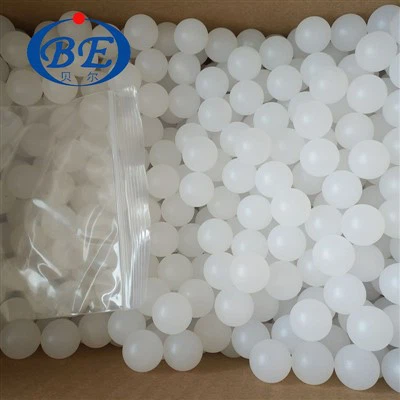
Torsional Strength of Acetal (POM) Balls: Key Properties, Testing & Industrial Applications
Acetal (Polyoxymethylene, POM) balls-commonly known as Delrin balls-are foundational precision components across industrial, automotive, and fluid control sectors. Renowned for high stiffness, low friction, excellent dimensional stability, and self-lubricating properties, these engineering plastic balls outperform many alternatives in dynamic load environments. Among their critical mechanical attributes, torsional strength-the ability to resist twisting forces (torque)-stands out as a defining factor for reliability in rotating, sealing, and load-bearing applications. This article explores the science of torsional strength in Acetal balls, key influencing factors, standardized testing methods, real-world industrial use cases, and expert guidance for sourcing high-quality Acetal balls from trusted manufacturers like Kaifeng Bell Steel Balls Co., Ltd.
What Is Torsional Strength, and Why It Matters for Acetal Balls
Torsional strength quantifies a material's capacity to withstand twisting loads before undergoing permanent deformation, cracking, or failure. For spherical components like Acetal balls, torque is often applied during rotation (e.g., bearings), sealing (e.g., pump check valves), or mechanical assembly (e.g., precision hinges). Unlike tensile or compressive strength, which resists linear forces, torsional strength addresses shear stress distributed across the ball's cross-section during twisting.
For Acetal balls, high torsional strength directly translates to:
Long-term dimensional stability: Resists warping or ovalization under repeated twisting loads.
Leak-proof performance: Maintains spherical integrity in pump seals and fluid control valves.
Extended service life: Prevents surface cracking or delamination in high-speed bearing applications.
Consistent friction control: Preserves smooth rotation in dynamic assemblies, reducing wear on mating components.
Acetal's molecular structure-with tightly packed crystalline chains (POM-H homopolymer, Delrin) or stabilized copolymer formulations (POM-C)-enables exceptional torsional resistance compared to other engineering plastics like nylon or PTFE. POM-H offers higher baseline torsional stiffness, while POM-C delivers better impact resistance under cyclic torsional loads, making each variant suitable for distinct industrial scenarios.
Core Factors Influencing the Torsional Strength of Acetal Balls
The torsional performance of Acetal balls is not uniform; it depends on material quality, design parameters, and manufacturing precision. Understanding these factors is critical for selecting the right Acetal ball for specific load requirements.
1. Acetal Material Grade and Purity
The primary driver of torsional strength is the quality and formulation of the Acetal resin:
High-grade POM: Virgin, unmodified Acetal (POM-H/POM-C) with a uniform molecular structure and minimal impurities exhibits 20–30% higher torsional strength than recycled or filled Acetal. Impurities or inconsistent polymerization create structural defects that act as stress concentration points, reducing torque resistance.
POM-H vs. POM-C: POM-H (Delrin) has a higher crystallinity rate (~75–85%) than POM-C (~60–70%), delivering superior torsional stiffness (10–15% higher shear modulus). POM-C, however, resists torsional fatigue better in humid or chemical-exposed environments.
Additives impact: Glass fiber or mineral fillers can boost torsional strength by 15–40% but may reduce ductility and increase brittleness. Unfilled Acetal balls remain the top choice for precision applications requiring balanced strength and flexibility.
2. Ball Size and Diameter
Size directly affects how torsional stress distributes across the ball's structure:
Larger diameters (≥10mm): Have more material volume to dissipate shear stress, supporting higher torque loads. For example, a 20mm Acetal ball can withstand ~40% more torque than a 5mm ball of the same grade.
Smaller diameters (<5mm): Stress concentrates more intensely at the surface, making them prone to micro-cracking under high torsional loads. These require ultra-precise manufacturing to ensure uniform stress distribution.
3. Spherical Precision and Surface Finish
Imperfections in shape or surface quality undermine torsional performance by creating stress hotspots:
Roundness tolerance: Precision-grade Acetal balls (G0/G1/G2) with roundness deviations ≤0.5μm distribute torsional stress evenly. Poorly shaped balls (oval or irregular) experience localized shear stress, leading to early failure.
Surface roughness: Smooth surfaces (Ra ≤0.1μm) reduce friction during rotation and prevent stress concentration at micro-defects. Rough or scratched surfaces act as initiation points for torsional cracking.
4. Manufacturing Process and Quality Control
Consistent production and rigorous quality assurance ensure batch-to-batch torsional strength uniformity:
Precision molding/grinding: Advanced injection molding and post-processing (grinding, polishing) eliminate internal voids or warping-common defects that reduce torsional capacity.
Quality testing: Manufacturers that conduct 100% inspection of roundness, surface finish, and material purity deliver Acetal balls with predictable torsional performance.
Standardized Testing Methods for Acetal Ball Torsional Strength
To guarantee performance, Acetal ball manufacturers validate torsional strength using industry-standard testing protocols and real-world simulations. These tests measure torque capacity, twist angle, and failure mode under controlled conditions.
1. Laboratory Torsion Testing (ASTM D1939)
The primary quantitative test uses a precision torsion testing machine:
Secure the Acetal ball in custom clamps to avoid surface damage.
Apply incremental torque at a constant rate (5°/minute) while measuring the twist angle.
Record the ultimate torsional strength (maximum torque before failure) and yield torsional strength (torque at 0.2% permanent twist).
Classify performance by failure mode: ductile (slow deformation) or brittle (sudden cracking). High-quality Acetal balls exhibit ductile failure under excessive torque.
2. Real-World Application Simulation
Laboratory data is complemented by application-specific testing to validate performance under actual working conditions:
Pump seal simulation: Test Acetal balls in a hydraulic pump to measure torque resistance during cyclic sealing and rotation.
Bearing endurance test: Run balls in a high-speed bearing assembly under load to assess torsional fatigue life.
Humidity/chemical exposure test: Expose balls to 85% humidity or mild chemicals (e.g., oils, detergents) before torsion testing to validate environmental stability.
3. Batch Quality Audits
Reputable manufacturers conduct random batch sampling for torsional testing, ensuring compliance with specifications. Each batch is accompanied by a test certificate detailing torsional strength, roundness, and surface finish data-critical for industrial buyers sourcing precision components.
Industrial Applications Where Torsional Strength of Acetal Balls Is Critical
Acetal balls' balanced torsional strength, low friction, and chemical resistance make them indispensable in high-stress dynamic applications. Below are key use cases where torsional performance directly impacts system reliability:
1. Pump Sealing Balls
In hydraulic, pneumatic, and fluid transfer pumps, Acetal balls act as check valve seals that rotate and seal under pressure. Torsional strength prevents deformation during repeated opening/closing cycles, ensuring leak-proof performance and consistent pump efficiency. POM-C balls are preferred here for their resistance to water and mild chemicals.
2. Precision Bearing Balls (Delrin Bearing Balls)
Acetal balls serve as low-cost, lubrication-free bearing elements in light-to-medium load bearings (e.g., conveyor rollers, automotive door hinges). High torsional strength enables smooth rotation under radial and axial loads, reducing wear on bearing races and extending service life. POM-H (Delrin) balls are ideal for high-precision, low-friction bearing applications.
3. Heavy Industrial Plastic Balls
In material handling, agricultural machinery, and industrial valves, Acetal balls withstand high torsional loads from contact with metal components, debris, or corrosive fluids. Their torsional resistance prevents cracking or deformation under heavy use, making them a durable alternative to metal balls in non-critical load applications.
4. Automotive Components
Acetal balls are used in fuel system valves, door lock mechanisms, and interior hinges, where they resist torsional stress from vibration and cyclic operation. Their low moisture absorption ensures consistent torsional performance in humid automotive environments.
Why Overseas Procurement Professionals Choose Kaifeng Bell for Acetal Balls
For global buyers sourcing high-torsion Acetal balls, Kaifeng Bell Steel Balls Co., Ltd (Bell Balls) stands as a leading Chinese manufacturer with 25+ years of expertise in precision plastic and metal ball production. Partnering with Bell Balls ensures access to high-quality Acetal balls with verified torsional strength, supported by rigorous quality control, scalable production, and global supply chain reliability. Here's why overseas buyers trust Bell Balls:
1. Unmatched Manufacturing Expertise & Capacity
Founded in 2010 (with predecessor operations dating to 2004), Bell Balls operates two state-of-the-art factories in Henan (10,000㎡, 200+ machines) and Shandong (5,000㎡, 50+ machines) Provinces. The company specializes in producing precision Acetal (POM) balls in POM-H (Delrin) and POM-C grades, with diameters ranging from 0.8mm to 100mm and precision grades G0/G1/G2. This extensive capacity supports both small-batch custom orders and large-scale industrial procurement, with lead times as fast as 7–14 days for standard sizes.
2. Rigorous Quality Control & Global Certifications
Bell Balls adheres to strict international quality standards, with all Acetal balls manufactured under ISO 9001:2015, SGS, ROHS, and REACH certifications. The technical team-with 30+ years of industry experience-conducts comprehensive inspections in a sophisticated laboratory, including torsional strength testing, roundness analysis, surface roughness measurement, and hardness verification. Every batch of Acetal balls is accompanied by a detailed test certificate, ensuring consistent torsional performance and compliance with global industrial specifications.
3. Premium-Grade Acetal & Customization Capabilities
Bell Balls uses virgin, high-purity POM resin for all Acetal ball production, eliminating the performance inconsistencies of recycled materials. Buyers can choose between POM-H (Delrin) for maximum torsional stiffness or POM-C for enhanced chemical and fatigue resistance. The company also offers full customization services, including custom diameters, tolerances, colors, and surface finishes (polished, matte) to meet unique application requirements. Beyond Acetal balls, Bell Balls provides a full portfolio of precision balls-stainless steel, glass, ceramic, aluminum-enabling one-stop procurement for global buyersBell Balls.
4. Proven Global Track Record & Customer-Centric Service
With 20+ years of export experience, Bell Balls serves clients across Europe, North America, Asia, and Australia, building a reputation for reliable quality, competitive pricing, and responsive support. The dedicated international trade team provides multilingual communication, technical guidance for material selection (e.g., POM-H vs. POM-C for specific torsional loads), and end-to-end order tracking. Whether buyers need Acetal balls for pump seals, precision bearings, or heavy industrial applications, Bell Balls delivers tailored solutions that balance performance, durability, and cost-effectiveness.
Conclusion
Torsional strength is a defining mechanical property that dictates the reliability and service life of Acetal (POM) balls in dynamic industrial applications. Influenced by material grade, size, precision, and manufacturing quality, high torsional strength ensures Acetal balls resist twisting deformation, maintain dimensional stability, and deliver consistent performance in pumps, bearings, and industrial valves. Standardized testing-including laboratory torsion tests and real-world simulations-validates performance, while rigorous quality control ensures batch-to-batch consistency.
For overseas procurement professionals, sourcing Acetal balls from a trusted manufacturer like Kaifeng Bell Steel Balls Co., Ltd guarantees access to high-quality, high-torsion Acetal balls supported by 25+ years of expertise, global certifications, and scalable production. By partnering with Bell Balls, buyers can confidently select Acetal balls that meet their exact torsional and performance requirements, driving efficiency and reliability in their industrial systems.
References
ASTM D1939, Standard Test Method for Torsional Properties of Plastics.
Engineering Plastics Handbook: Polyoxymethylene (POM) Properties and Applications.
Kaifeng Bell Steel Balls Co., Ltd. Quality Assurance & Product Specifications (2026).
Industry Research Report: Torsional Performance of Acetal Balls in Fluid Control Systems (2025).