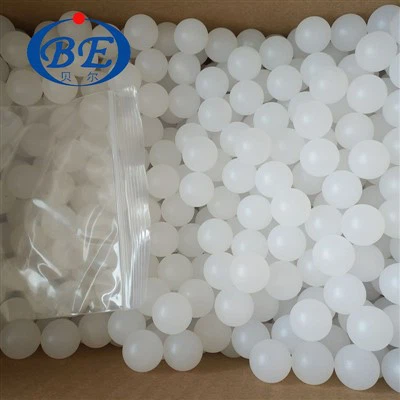
Fatigue Resistance of Solid Plastic Balls: Key Factors, Testing & Industrial Value
Fatigue resistance defines how solid plastic balls perform under repeated compression, shear, or rotational loads-making it a core reliability metric for bearings, valves, and dynamic industrial systems. Unlike static strength, which measures resistance to one-time failure, fatigue resistance determines service life under millions of loading cycles, where micro-cracks form, propagate, and eventually cause fracture or deformation. For engineers and procurement teams, understanding fatigue behavior is critical to selecting materials that balance durability, cost, and performance. This article explains fatigue resistance in solid plastic balls, explores influencing factors, reviews standardized testing, and highlights why Kaifeng Bell is the trusted supplier for high-fatigue solid plastic balls.
What Is Fatigue Resistance for Solid Plastic Balls?
Fatigue resistance is the ability of a plastic sphere to withstand cyclic loading/unloading without permanent deformation, cracking, or functional failure. In operation, solid plastic balls experience repeated contact stresses: rolling in bearings, seating/unseating in valves, or vibrating in machinery. Each cycle creates microscopic stress concentrations; over time, these become micro-cracks that grow until the ball fails (e.g., cracking, ovalization, or surface spalling).
Fatigue performance is quantified by fatigue life: the number of cycles a ball endures before failure under defined load, frequency, and environmental conditions. For industrial solid plastic balls, typical benchmarks range from 10⁵ to 10⁷ cycles depending on material and grade. High fatigue resistance ensures:
Long-term dimensional stability (no shape distortion under cyclic loads)
Consistent sealing performance in valves (no leakage from deformed balls)
Reduced maintenance costs (fewer replacements in high-cycle systems)
Smooth operation in bearings (no premature wear or noise)
Core Factors Influencing Fatigue Resistance of Solid Plastic Balls
Fatigue performance is not uniform-it depends on material chemistry, manufacturing precision, design parameters, and operating conditions.
1. Material Grade & Molecular Structure
The plastic resin is the primary determinant of fatigue resistance. High-performance engineering plastics outperform commodity plastics due to tighter molecular chains and higher crystallinity:
POM (Acetal/Delrin): The gold standard for fatigue resistance. POM-H (homopolymer, Delrin) has 75–85% crystallinity, delivering exceptional stiffness, low creep, and excellent fatigue life (up to 10⁷ cycles under moderate loads). POM-C (copolymer) offers better chemical resistance and fatigue stability in humid environments.
PA66 (Nylon): Good fatigue resistance with high impact strength, but prone to moisture absorption (reduces fatigue life in wet conditions).
PP (Polypropylene): Flexible, low-cost, and chemically resistant, but lower fatigue resistance than POM/PA66-suitable for low-cycle, low-load applications (e.g., float valves).
PTFE (Teflon): Ultra-low friction and chemical inertness, but poor fatigue resistance under high cyclic loads (prone to creep and deformation).
PEEK: Premium high-temperature plastic with outstanding fatigue resistance (surpasses POM in extreme heat), ideal for aerospace and medical applications.
Virgin, unmodified resins outperform recycled or filled plastics-impurities and fillers create stress concentrations that reduce fatigue life by 20–40%.
2. Spherical Precision & Surface Finish
Even high-grade materials fail early with poor manufacturing precision:
Roundness Tolerance: Precision grades (G0/G1/G2) with roundness deviations ≤0.5μm distribute stress evenly. Oval or irregular balls develop localized shear stress, accelerating crack growth.
Surface Roughness: Smooth surfaces (Ra ≤0.1μm) reduce stress concentrations at micro-defects. Rough or scratched surfaces act as crack initiation points, cutting fatigue life by half.
Internal Uniformity: Voids, warping, or inconsistent density from poor molding create internal stress hotspots, leading to premature fatigue failure.
3. Ball Size & Diameter
Size directly affects stress distribution:
Larger Balls (≥10mm): More material volume to dissipate shear stress, supporting 30–50% more cycles than smaller balls of the same grade.
Smaller Balls (<5mm): Stress concentrates intensely at the surface, requiring ultra-precise manufacturing to avoid micro-cracking.
4. Operating Conditions
Environmental and loading parameters significantly impact fatigue life:
Load Magnitude: Higher contact stress (e.g., heavy bearing loads) reduces fatigue life exponentially.
Cycle Frequency: High-frequency loading (e.g., high-speed bearings) accelerates crack growth vs. low-frequency operation.
Temperature: Extreme heat (≥80°C) softens plastics, reducing fatigue resistance; cold temperatures increase brittleness.
Humidity/Chemicals: Moisture (for nylon) or corrosive chemicals degrade molecular structure, shortening fatigue life.
Standardized Testing for Fatigue Resistance of Solid Plastic Balls
Manufacturers validate fatigue performance using ASTM/ISO-standardized tests and real-world simulations to ensure reliability.
1. Rotating-Bending Fatigue Test (ASTM D671)
The most common laboratory test:
Secure the solid plastic ball in precision clamps to avoid surface damage.
Apply cyclic bending stress at a fixed frequency (10–50 Hz) while monitoring crack formation.
Record fatigue life (cycles to first crack) and endurance limit (maximum stress for infinite life, ~10⁷ cycles).
2. Rolling Contact Fatigue Test (Bearing Simulation)
Simulates bearing operation:
Run the ball in a precision bearing assembly under defined load and speed.
Measure wear depth, surface roughness, and crack formation over millions of cycles.
High-fatigue balls show <2μm wear depth and no macro-cracking after 5×10⁶ cycles.
3. Valve Cyclic Test
Validates sealing performance:
Subject the ball to repeated seating/unseating cycles (up to 10⁶ cycles) under fluid pressure.
Check for deformation, leakage, or surface damage post-test.
4. Batch Quality Audits
Reputable manufacturers conduct random batch sampling for fatigue testing, with each batch accompanied by a test certificate detailing fatigue life, roundness, and surface finish data.
Industrial Applications Where Fatigue Resistance Is Critical
Fatigue performance directly impacts system reliability in high-cycle applications:
Precision Bearings: Solid plastic balls (POM/PA66) act as rolling elements in conveyor rollers, automotive hinges, and medical device bearings. High fatigue resistance ensures smooth, long-term operation without wear or noise.
Fluid Control Valves: POM balls in check valves, float valves, and hydraulic valves withstand millions of opening/closing cycles. Fatigue resistance maintains spherical integrity and sealing performance, preventing leakage.
Sports Equipment: Skateboard bearings, toy mechanisms, and exercise equipment use solid plastic balls that resist impact and cyclic stress without deformation.
Food & Pharmaceutical Machinery: POM/PP balls in processing equipment handle repeated contact with fluids and debris, requiring fatigue resistance and chemical inertness.
Why Overseas Buyers Choose Kaifeng Bell for High-Fatigue Solid Plastic Balls
For global procurement teams sourcing reliable solid plastic balls, Kaifeng Bell Steel Balls Co., Ltd (Bell Balls) is the leading Chinese manufacturer with 25+ years of expertise in precision plastic ball production. Partnering with Bell Balls ensures access to high-fatigue solid plastic balls supported by rigorous quality control, scalable production, and global supply chain reliability.
1. Unmatched Manufacturing Expertise & Capacity
Founded in 2010 (with predecessor operations dating to 2004), Bell Balls operates two state-of-the-art factories in Henan (10,000㎡, 200+ machines) and Shandong (5,000㎡, 50+ machines) Provinces. The company specializes in producing precision solid plastic balls in POM (Delrin), PP, PA66, PTFE, PEEK, and PMMA, with diameters ranging from 0.8mm to 100mm and precision grades G0/G1/G2. This extensive capacity supports both small-batch custom orders and large-scale industrial procurement, with lead times as fast as 7–14 days for standard sizes.
2. Rigorous Quality Control & Global Certifications
Bell Balls adheres to strict international quality standards, with all solid plastic balls manufactured under ISO 9001:2015, SGS, ROHS, and REACH certifications. The technical team-with 30+ years of industry experience-conducts comprehensive inspections in a sophisticated laboratory, including fatigue resistance testing, roundness analysis, surface roughness measurement, and hardness verification. Every batch of solid plastic balls is accompanied by a detailed test certificate, ensuring consistent fatigue performance and compliance with global industrial specifications.
3. Premium-Grade Materials & Customization
Bell Balls uses virgin, high-purity resins for all solid plastic ball production, eliminating the performance inconsistencies of recycled materials. Buyers can select the optimal material for their fatigue requirements: POM-H for maximum fatigue life, POM-C for humid environments, PA66 for impact resistance, or PEEK for high-temperature applications. The company also offers full customization services, including custom diameters, tolerances, colors, and surface finishes (polished, matte) to meet unique application needs. Beyond solid plastic balls, Bell Balls provides a full portfolio of precision balls-stainless steel, glass, ceramic, aluminum-enabling one-stop procurement for global buyers.
4. Proven Global Track Record & Customer Support
With 20+ years of export experience, Bell Balls serves clients across Europe, North America, Asia, and Australia, building a reputation for reliable quality, competitive pricing, and responsive multilingual support. The dedicated international trade team provides technical guidance for material selection (e.g., POM vs. PP for fatigue-critical applications), end-to-end order tracking, and post-sales assistance. Whether buyers need solid plastic balls for precision bearings, fluid control valves, or sports equipment, Bell Balls delivers tailored solutions that balance fatigue resistance, durability, and cost-effectiveness.
Conclusion
Fatigue resistance is a defining property that dictates the reliability and service life of solid plastic balls in dynamic industrial applications. Influenced by material grade, manufacturing precision, size, and operating conditions, high fatigue resistance ensures solid plastic balls resist cracking, deformation, and wear under millions of cyclic loads. Standardized testing-including rotating-bending and rolling contact fatigue tests-validates performance, while rigorous quality control ensures batch-to-batch consistency.
For overseas procurement professionals, sourcing solid plastic balls from a trusted manufacturer like Kaifeng Bell Steel Balls Co., Ltd guarantees access to high-quality, high-fatigue solid plastic balls supported by 25+ years of expertise, global certifications, and scalable production. By partnering with Bell Balls, buyers can confidently select solid plastic balls that meet their exact fatigue and performance requirements, driving efficiency and reliability in their industrial systems.
References
ASTM D671, Standard Test Method for Flexural Fatigue of Plastics by Constant-Amplitude of Force.
Engineering Plastics Handbook: Fatigue Properties of Polyoxymethylene (POM) and Polyamide (PA66).
Kaifeng Bell Steel Balls Co., Ltd. Quality Assurance & Solid Plastic Ball Specifications (2026).
Industry Research Report: Fatigue Performance of Solid Plastic Balls in Bearing and Valve Applications (2025).